
5 Minimum Requirements Before Considering Letting Your Dog Off Lead.
The other day I was taking my dogs for a run at the park and there was another family there with a 7-month-old golden retriever puppy. As my dogs were running near this puppy, she came bolting over to say hi to them.
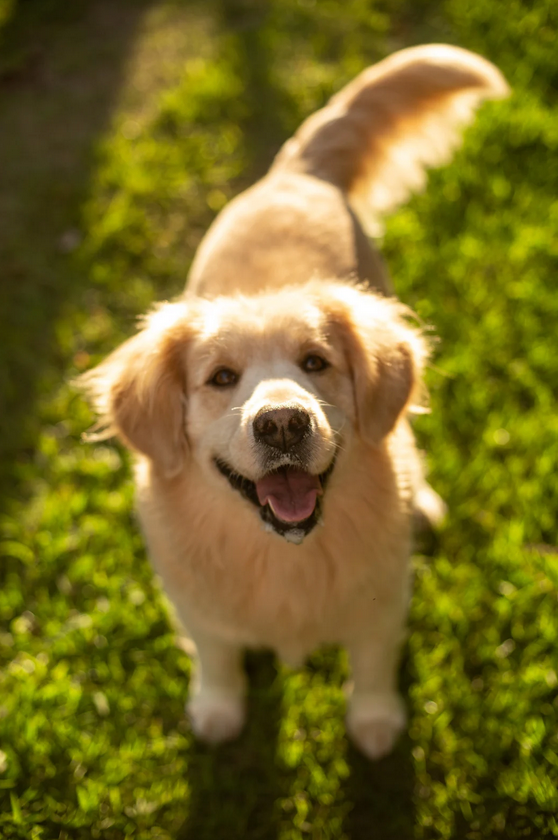
Her caregivers were desperately calling her name…no response….calling things out like “touch”…. no response, patting their legs..no response from their puppy. She was much more interested in saying hi to my dogs instead of going to her caregivers.
She was a friendly puppy, so why am I sharing this experience with you? Because Safety, Safety, Safety!!! What I haven’t told you yet is this park is an off-lead dog park (relatively quiet place which is why I take my dogs there) with no fencing, near two roads. The scary thing for me is that this puppy could have easily seen a dog walking past on the other side of the road and taken off, the caregivers would have had no chance of being able to get her to come back to them and she could have been hit by a car.
So how do you know if your dog might be ready for off lead in public spaces?
Five Minimum Requirements Before You Even Consider Letting Your Dog Off Lead In A Public Space*:
1/ Friendly - Is your dog friendly, sociable? If another dog or person comes over to them what would be their response? Would they excitedly approach, walk away, ignore or perhaps growl and lunge? Consider their general response not only to adult dogs and people but what about toddlers or puppies? If your dog is not sociable and their go to response is to growl, lunge and snap at other people and dogs then going to an off lead dog space is not a good idea. It is not okay to place other people or their dogs in any sort of danger by having your dog bite or attempt to bite them. It is also unfair for your dog’s welfare to put them in these sorts of situations, that make them feel so unsafe that they would respond in this way. Instead, if you would like your dog to get some off lead time, consider hiring out a dog specific sniff space where your dog can run and explore on their own safely.
2/ Polite Manners - So if your dog is friendly and doesn’t pose any known safety concern for others, the next consideration is your dog’s general manners. Is your dog’s behaviour going to negatively impact the experiences of other people or dogs sharing the space? Think about your dog’s tendency to get over excited, are they likely to jump on other people or dogs? What about persistently getting into another dog’s space and not leaving them alone or stealing another dog’s toy. I remember a time when my friend and I went to a park with our dogs and another dog cocked his leg and urinated all over my friends’ shoe! This absolutely negatively impacted our experience. It is important to ensure that your dog has polite manners before letting them off lead in public spaces.
3/ Ability To Interrupt - No dog is ever going to be a 100% perfect with their behavioural choices. There is always some sort of risk involved in letting your dog off lead in a public space. It is therefore very important to have a way to interrupt your dog’s behaviour when required. This might be training a “leave it” cue so your dog moves away and stops interacting with something in their environment e.g., a snake. This positive interrupter needs to get a reliable quick response from your dog so you can get them out of a challenging or potentially dangerous situation quickly. Why isn’t having a recall cue enough? Let’s imagine the situation that the snake actually slithers across the path behind your dog, who is up ahead of you, and in front of you. Your dog sees it slither behind them and is interested in sniffing this novel animal. In this instance you don’t want to call your dog to you as this would mean having them run over the snake to get to you. By having a positive interrupter, in this case a “leave it” cue you can direct them to stop moving towards the snake. Another recommendation is being able to direct your dog to be in a stationary position like a sit or drop wherever they are in the space. This is another way you could interrupt your dog’s behaviour if required or prevent them moving towards something unsafe.
4/ Value For You - Your dog actually wants to hang around with you! You are a very valuable “thing” at the park. You might notice your dog checking in with you, making sure you are nearby. If you stop walking and stand still, your dog notices and stops walking themselves waiting for you to keep coming. If you continue standing still, they might even start running back to you. If your dog is so engrossed in all the exciting things around them and completely forgets you exist, then the distractions in the environment maybe too high for them to listen to you when you need them too.
5/ Reliable Recall Response - You have not only taught them to respond to a recall cue (e.g. their name) but you have repeatedly tested this in a whole range of safe spaces with different distractions around and have had 99% success on first cue. This might include calling your dog in your backyard when the possums are out at night and your dog is engrossed in watching them, when you have dog food in bowls at your friend’s tennis court and you call them past the food, when your dog is playing with your friends dog in your backyard, when your niece is eating dinner nearby, when your friend is bouncing a tennis ball in their backyard, when your dog is in mid-flight chasing the ball while playing fetch, when a car goes past the front of your house in your enclosed front yard. Think of a whole range of distracting scenarios and if you genuinely haven’t tried them or you already know that there is no chance your dog would come back to you then please do not put them in the situation of being off lead in a public space. It is a disaster waiting to happen.
Environmental Factors:
While these are my top recommendations for determining if it might be safe to let your dog off lead in a public space. There are always other environmental factors to consider including (but not limited too): the weather (e.g., too hot or cold, thunderstorm), other animals (e.g., snakes, puffer fish), the ground surface (e.g., broken glass, syringes, slippery stairs), other dogs (e.g., unfriendly dogs in the space), falling or projectile objects (e.g., someone flying a kite nearby, playing basketball). Ensuring you explore the space (as much a realistically possible) before letting your dog off lead is important. Being willing to leave if it becomes unsafe (e.g., someone brings an aggressive or highly dysregulated dog into the space, a thunderstorm develops) is also key to keeping you and your dog safe whilst having fun.
Dog's Health:
Your dog’s health is also another consideration for how much exercise is safe for them (e.g., how well can they breathe, do they have arthritis, do they have a heart condition). Veterinarian advice is always recommended when considering changing their exercise routine.
Local Law:
Don’t forget to check your local government or council rules for where dogs are allowed off lead in public spaces. Most areas will have designated off lead spaces for dogs, everywhere else requires them to be on lead. Some public spaces will not allow dogs at all (e.g., national parks).
*Disclaimer: Please note that these are basic recommendations for considering letting your dog off lead in a public space. If your dog doesn’t have these basic skills, then definitely do not let your dog off lead in these spaces. If your dog does have these five basic recommendations, then it is still at your own risk to allow them off lead in a public space. There is never anyway to guarantee that you and your dog will remain safe in these settings.
Other options that might be a safer alternative is friends or relatives backyard (just exploring somewhere new can be fun for most dogs), hiring a dog friendly space for your own use, keeping your dog on a long line and harness, if in an appropriate location for this, so they can explore a bit more but you still have a lead as a safety back up.
Want help teaching your dog the beginning of these skills, feel like you need professional support? Please check out my Programs and give me a call to discuss your dog.


Comments